Contact lenses are a flexible alternative to glasses, for practical or for medical reasons. For them to do your eyes good in the long run, what matters is the fitting and above all the regular check-up.
First things first: the check-up
Our main concern is not the lens but the health of your eyes. Anyone who wears contact lenses puts something on the cornea every day. Most eyes tolerate that well, but changes develop slowly and without pain. They show up at the check-up, not in everyday life.
That is why we recommend at least one check-up a year, even when everything is going well. How often makes sense in your case depends on the type of lens and on your eyes.
Eye doctor, optician or online?
A fair question, and we answer it honestly, even if the answer is not always the one that benefits us.
In Austria, qualified master opticians and contact lens opticians are allowed to determine and fit visual aids. For a straightforward standard fitting on healthy eyes, going to an optician can therefore be perfectly fine. For small children and for custom-made lenses a doctor’s prescription is required; the details depend on age and health insurance fund.
The difference lies elsewhere: an optician may not make a diagnosis and may not treat an eye disease. They are in fact obliged to refer to a doctor if a disease is suspected. With a purely online purchase there is no examination at all.
Before every fitting we check whether the eyes are suitable for contact lenses, and in doing so see things that do not show up when only the prescription is determined. As soon as it is about dry eyes, unusual corneal shapes or medical specialty lenses, you are in the right place here.
What else the examination can reveal
- Raised eye pressure: can damage the optic nerve unnoticed over years, see glaucoma.
- Changes in the retina: for example in diabetes or early macular degeneration.
- Keratoconus: a progressive change in the shape of the cornea that should be recognised early.
- Dry eyes and inflammation: they help decide which lens is tolerable at all.
- Effects of long-term lens wear: such as lack of oxygen or blood vessels growing into the cornea.
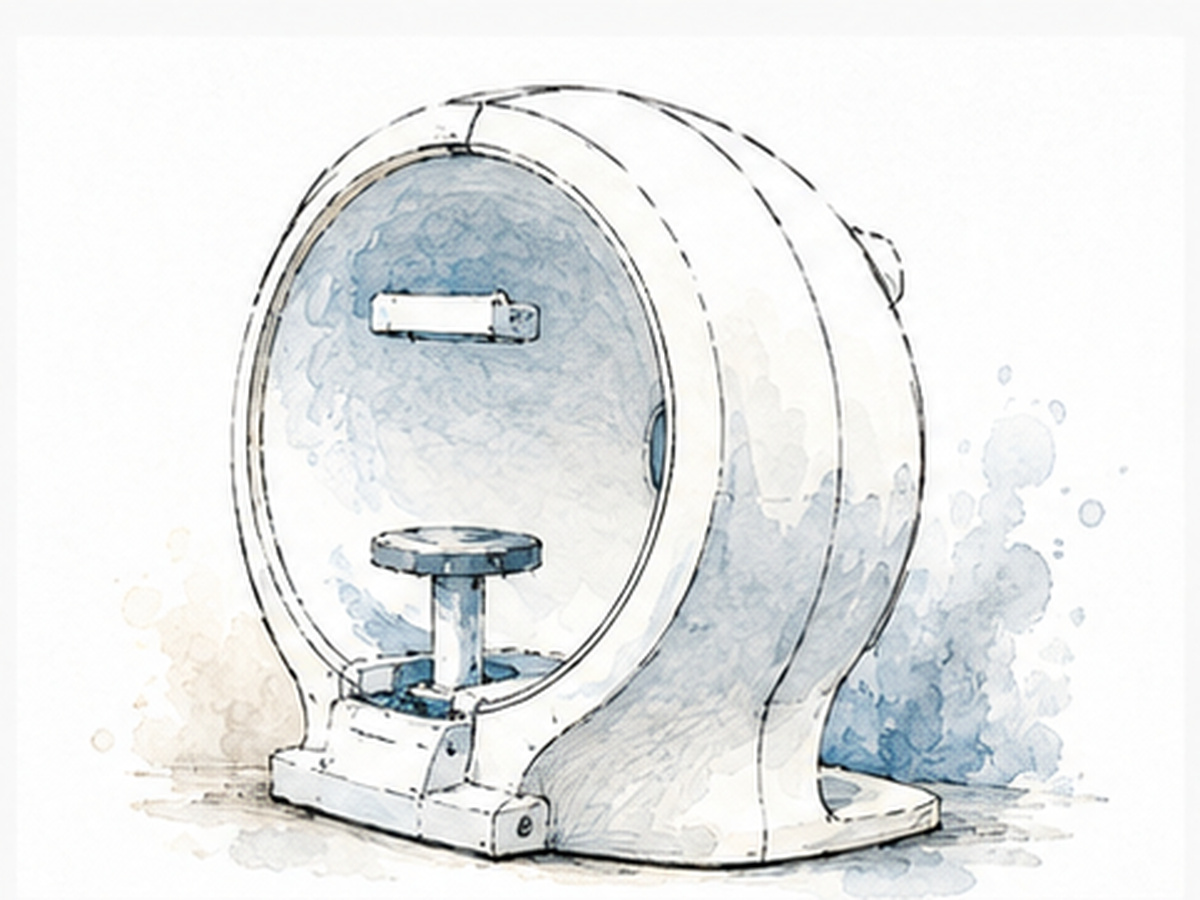
To assess the shape of the cornea we use topography, a measurement of its surface. We choose the lens on that basis.
Which contact lens suits me?
Soft lenses
Comfortable straight away, short adjustment period, good for occasional wear and for sport.
Daily lenses are the simplest in terms of hygiene: a fresh lens every day, no cleaning, lower risk of infection. Monthly lenses are cheaper for daily wear but need consistent care. If cleaning tends to slip, you are better off with daily lenses.
Rigid gas-permeable lenses, often called hard lenses
They let more oxygen reach the cornea, last a long time and correct stronger astigmatism much more precisely than soft lenses. The price for this is an adjustment period of a few days to weeks, during which you can feel the lens.
Those who get through this period often have better vision and fewer problems with dry eyes.
Scleral lenses
Large rigid specialty lenses that rest on the white of the eye and bridge the cornea completely. In between there is a reservoir of fluid that keeps the surface of the eye moist all the time.
This can be very comfortable in keratoconus, after corneal surgery and with severe dry eye, when other lenses are no longer tolerated.
The fitting is considerably more involved than with other lenses and takes several appointments, because the lens is matched individually to the surface of your eye. It is always preceded by an eye examination with a prescription, because scleral lenses are used on diseased or altered corneas, and a public insurance subsidy is only possible with this prescription.
Ortho-K, lenses for the night
Rigid lenses that are worn overnight and temporarily shape the cornea so that during the day you usually need no visual aid.
Important to understand: the effect only lasts as long as the lenses are worn regularly. Ortho-K does not cure short-sightedness. If you stop wearing the lenses, the cornea returns to its original shape and you need your usual correction during the day. The eyes do not get worse as a result; they return to where they started.
Studies suggest that Ortho-K can slow the progression of short-sightedness in children. Whether the method is suitable for you or your child is clarified at a thorough examination.
Does public health insurance pay for contact lenses?
Only one visual aid per period
Within a set period of use, the public health insurance fund generally subsidises only one visual aid, so either glasses or contact lenses, not both. If you have contact lenses subsidised, you usually get no subsidy for glasses in the same period and vice versa, unless there is a new medical reason. So think beforehand about which visual aid matters more in your everyday life.
Subsidy and patient contribution
Medically necessary contact lenses can be subsidised where there is a corresponding indication, for example keratoconus or pronounced refractive errors. Lenses chosen for cosmetic reasons generally cannot. The basis is an examination by an eye specialist with a prescription.
Where there is a subsidy, insured persons pay a contribution themselves. Children and people exempt from the prescription charge are excluded from this under certain conditions. The prescription is redeemed at a contract partner of your health insurance fund.
Amounts and periods change and differ between insurance funds. Binding information on subsidy, patient contribution and minimum period of use is given by your fund (ÖGK, BVAEB, SVS or others such as KFA).
What does the fitting cost?
Contact lenses: examination and fitting
Public insurance or subsidy
- Eye examination and check-upe-card
- Prescription for contact lensese-card
- Lenses with a medical indicationsubsidy
Private service
- Fitting and advice[[ Price ]]
- Fitting of specialty lenses[[ Price ]]
- Ortho-K fitting[[ Price ]]
- Tolerance certificate for driving licence[[ Price ]]
You get the lenses themselves from an optician; they are not included in these prices. We discuss what applies in your case before the fitting.
UNIQA LARA partner
Our practice is a LARA partner of UNIQA. Depending on your policy, outpatient services can be billed directly to UNIQA, so you do not have to pay upfront.
If you have UNIQA insurance, please use our English request form rather than the online booking and choose “UNIQA with LARA card”, so that we can prepare the billing.
Frequently asked questions
Can I wear contact lenses with dry eyes?
Often yes, but not every lens is suitable. More important than the lens is usually treating the dry eyes themselves. If only the lens is changed without looking at the cause, the problem remains.
Are daily lenses better for the eyes?
For many people, yes. Because a fresh lens is used every day, fewer deposits and germs build up. The advantage is all the greater the more casual the care is in everyday life, and that is not criticism but experience.
Can I leave lenses in overnight?
Only certain lenses are intended for this, and the risk of infection is considerably higher. Please do not try it on your own; check with us first.
My eye is red and painful, and I wear lenses
Take the lens out immediately and do not put it back in. A red, painful eye in a lens wearer needs to be examined promptly, because it can be an inflammation of the cornea that must be treated quickly.
During opening hours please contact us; outside them go to an eye emergency department. You will find addresses on our contact page.
Do I need a certificate for my driving licence?
Anyone who wears contact lenses generally needs a tolerance certificate from an eye doctor for the driving licence examination. It confirms that the lenses are tolerated and provide the required vision. We issue it as part of an examination; this is a private service.
How do I look after my lenses properly?
Wash and dry your hands before putting lenses in and taking them out. Clean and disinfect after every wear, using only the recommended products. Never use tap water, neither for the lenses nor for the case. Rinse the case daily, let it dry and replace it regularly. Throw daily lenses away every day and replace monthly lenses after 30 days, even if they still look fine.
More services
Arrange an appointment
Fittings are arranged through a request. Write to us briefly what it is about and we will get back to you.
Request an appointment in English →
In the form, choose the topic “Contact lenses”. The online booking system is in German, which is why we ask English-speaking patients to use the form.
By phone
The phone is staffed at the times below. These are not the opening hours of the practice.
| Monday | 11:30–14:00 & 16:00–19:00 |
| Tue & Thu | 09:00–10:30 & 11:30–13:00 |
| Friday | 09:30–12:30 & 14:00–16:00 |
Phone +43 1 909 22 22
Email anmeldung@schild-burggasser.at
Ketzergasse 51, ground floor, 1230 Vienna, step-free access · Insurance and costs →