Laser treatment on the eye sounds like a major procedure. In fact you sit at a device just as in a normal examination, nothing is cut and nothing is stitched, and you go home afterwards. How long it takes and how comfortable it is does depend on the treatment, though. For each one we say what you should expect.
First of all: this is not about lasering away your glasses
When people hear “laser eye treatment”, most think of correcting short-sightedness to get rid of glasses. That is not what this page is about. This page is about therapeutic laser treatments that treat or prevent an eye disease.
After-cataract: laser after cataract surgery
After cataract surgery the artificial lens sits in a very thin, natural capsule. In some people this capsule turns cloudy after months or years. Vision then slowly gets worse again, often with glare, very much like before the operation.
Many therefore believe the cataract has come back. It has not. The artificial lens itself stays clear; only the capsule behind it has clouded.
How is it treated?
The laser makes a small opening in the cloudy capsule, exactly where light needs to pass through. Beforehand the eye is numbed with drops and the pupil is dilated. You sit at a device with your chin on a rest. The treatment itself takes a few minutes per eye.
Afterwards the eye is sensitive to light for a few hours and blurred close up, because the pupil is still dilated. You cannot drive straight afterwards, so plan for someone to accompany you or use public transport. Many notice the improvement the same day or the next.
Will I need this again and again?
No. The opening remains, and an after-cataract does not come back in the same place. As a rule the treatment is needed once per eye.
Are there risks?
The treatment is considered very safe. For a short time you may often see more dark floaters, which usually settle again. Rarely there is a brief rise in eye pressure, which is why we check afterwards. Everything else is discussed in the consent conversation.
Retinal laser for diabetes and blood vessel problems
Over time, diabetes and high blood pressure damage the fine blood vessels of the retina. The vessels become leaky, new fragile vessels form, and in the worst case there is bleeding or a retinal detachment. For a long time this happens entirely without pain.
The laser treats the affected areas in a targeted way so that the condition does not get worse. Important to understand: the aim is to preserve the vision you have. Vision already lost does not come back. This is exactly why regular checks matter so much in diabetes, even when you see well.
A hole or tear in the retina can also be secured with the laser before it develops into a detachment. A kind of weld seam is placed around the spot, holding the retina in place.
How does the treatment work?
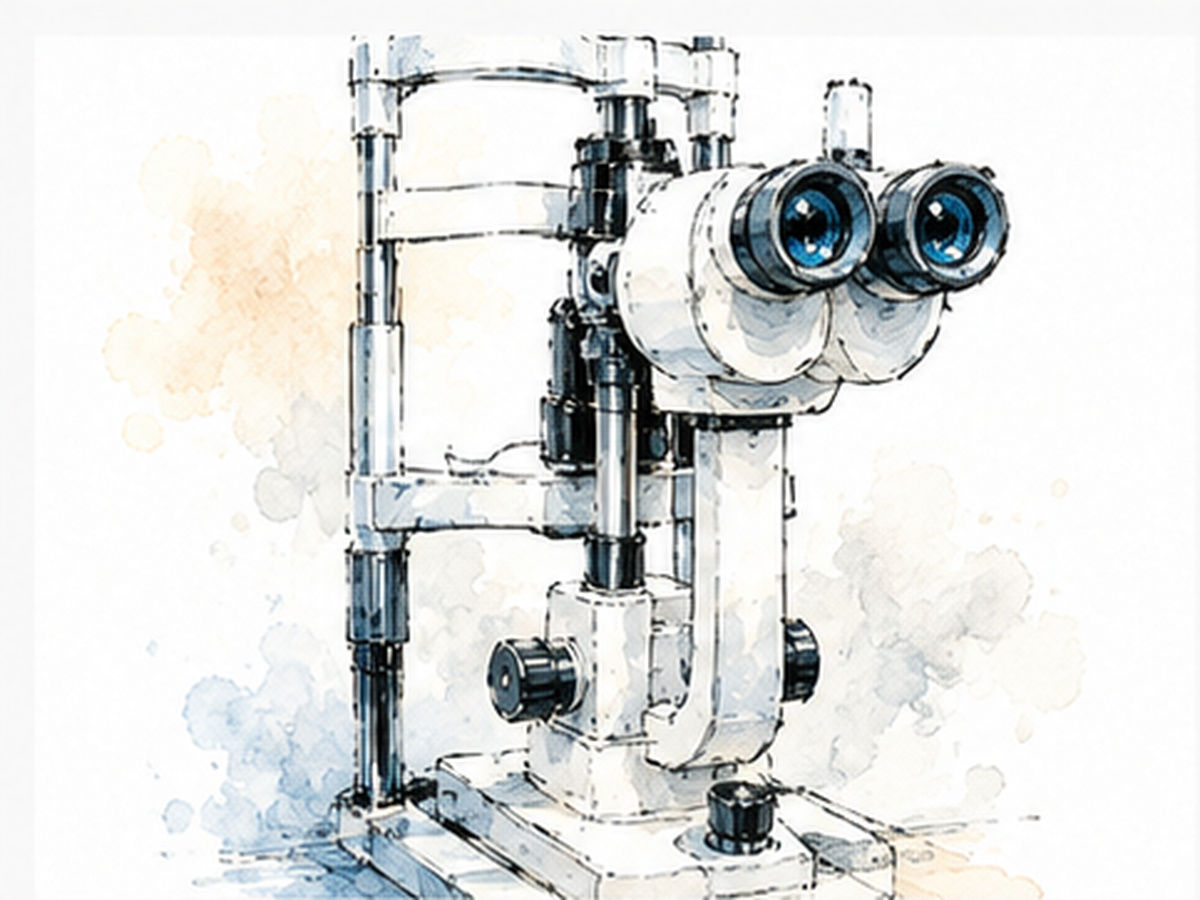
The pupil is dilated, which takes about 30 to 45 minutes. Then the eye is numbed with drops and a contact lens is placed on it. You sit at a device similar to the slit lamp, chin on a rest. During the treatment you see bright flashes of light.
How long it takes depends on how much has to be treated. Securing a single retinal hole takes a few minutes. Treating larger areas in diabetes takes longer and is usually split over several sessions.
Is retinal laser painful?
Here our answer is different from the other laser treatments. Retinal laser can be unpleasant, and some describe it as stinging or burning, especially when large areas or the far periphery are treated. The numbing drops work on the surface, not in depth.
Tell us during the treatment if it becomes too much. We can adjust the settings, take breaks or split the treatment over several sessions. For very sensitive eyes there are additional options for anaesthesia, which we discuss beforehand.
How many sessions will I need?
For a retinal tear usually one, sometimes a follow-up treatment. For advanced diabetic retinal disease several sessions are usual, spread over weeks. Afterwards we check whether the treatment was sufficient.
What changes permanently afterwards?
This needs saying honestly: the laser leaves scars in the retina. That is intended, because these scars are what stabilise it. But they remain.
With small treatments you notice nothing. If large areas are treated, vision at dusk and at night can become poorer, and the side vision can narrow. For people who drive at night, that matters.
It sounds harsh, but this is the trade-off: accepting a limitation in order to keep central vision. We discuss this with you beforehand so that you know what you are agreeing to.
And afterwards, on the same day?
The eye is sensitive to light for several hours and blurred close up because the pupil is dilated. You cannot drive, so plan for someone to accompany you or use public transport. Some people report a headache or a feeling of pressure on the day of treatment.
Sudden flashes of light or a shadow in your vision
If you suddenly see flashes of light, many new dark spots like a shower of soot, or a shadow or curtain moving in from the edge of your vision: this can be the start of a retinal detachment. Go to an eye emergency department immediately, or outside opening hours call an ambulance on 144. Every hour counts here.
Laser for a narrow drainage angle
In some people the drainage route for the fluid inside the eye is naturally narrow. If it closes completely, the pressure rises massively within hours. That is an acute glaucoma attack, with very severe pain, a red eye and nausea, and a genuine emergency.
If the narrow angle is recognised beforehand, this can be prevented. The laser creates a tiny additional passage in the iris through which the fluid can drain even if the normal route is blocked. The treatment takes a few minutes and is preventive, not curative.
How do I know whether I am affected?
You do not, as long as nothing happens. A narrow angle is noticed at the eye examination, when we look directly at the drainage route. Some people occasionally notice rainbow rings around lights or a slight feeling of pressure beforehand, especially in the evening or in the dark.
Long-sighted people and people with small eyes are affected more often. Certain medicines can also trigger an attack, which is why some package leaflets carry a warning about narrow-angle glaucoma.
How does it work and what happens afterwards?
Unlike usual, the pupil is not dilated here but constricted. The eye is numbed, a contact lens is placed on it, and the treatment takes a few minutes per eye. Afterwards we check the eye pressure.
Usually both eyes are treated, because a narrow angle generally affects both. For a short time there can be more glare or double outlines; this normally settles again.
Laser for glaucoma instead of drops
In glaucoma, SLT laser treatment can improve drainage inside the eye and so lower the eye pressure. For some people that means fewer eye drops, or for a time none at all.
Because this is closely linked to the disease itself, we describe it in detail there: glaucoma and SLT laser treatment.
What does it cost?
Laser treatments, price per eye
- After-cataract[[ Price ]]
- Narrow drainage angle[[ Price ]]
- Retina[[ Price ]]
- Glaucoma (SLT)[[ Price ]]
Whether a treatment is covered by public health insurance in an individual case depends on medical necessity. We discuss what you can expect to pay before the treatment.
UNIQA LARA partner
Our practice is a LARA partner of UNIQA. Depending on your policy, outpatient services can be billed directly to UNIQA, so you do not have to pay upfront.
If you have UNIQA insurance, please use our English request form rather than the online booking and choose “UNIQA with LARA card”, so that we can prepare the billing.
Frequently asked questions
Is the treatment painful?
That depends on which one. A blanket answer would be dishonest.
After-cataract and narrow angle: as a rule painless. Most people describe a brief flickering of light and slight pressure from the contact lens.
Retinal laser: can be unpleasant to painful, especially when large areas are treated. The numbing drops only work on the surface. Tell us during the treatment if it becomes too much, and we will adjust or split it over several sessions.
SLT for glaucoma: generally well tolerated.
Do I need to bring someone with me?
You should not drive yourself afterwards. Whether you need someone with you or can manage on public transport depends on the treatment. We will tell you at the appointment beforehand.
How long does it take in total?
The laser itself takes a few minutes for after-cataract and narrow angle, and considerably longer for retinal laser, depending on the extent. In any case allow one to two hours in the practice, because drops are given and need time to work beforehand, and the eye pressure is checked afterwards.
Can I have both eyes done on the same day?
That depends on the treatment and on the findings. Often it is split over two appointments, so that one eye can recover and the effect can be assessed.
Will this get rid of my glasses?
No. These treatments do not correct a refractive error. They treat a disease or prevent one.
More services
Arrange an appointment
Whether a laser treatment is an option for you is clarified at an examination. Please request an advice appointment for this.
Request an appointment in English →
In the form, choose the topic “Laser treatment”. The online booking system is in German, which is why we ask English-speaking patients to use the form.
By phone
The phone is staffed at the times below. These are not the opening hours of the practice.
| Monday | 11:30–14:00 & 16:00–19:00 |
| Tue & Thu | 09:00–10:30 & 11:30–13:00 |
| Friday | 09:30–12:30 & 14:00–16:00 |
Phone +43 1 909 22 22
Email anmeldung@schild-burggasser.at
Ketzergasse 51, ground floor, 1230 Vienna, step-free access · Insurance and costs →