Glaucoma is one of the most common causes of permanent sight loss. The treacherous part: it does not hurt and it starts at the outer edge of the field of vision. By the time someone notices it themselves, part of the optic nerve has usually already been lost, and that does not come back.
The good news: detected early, glaucoma can as a rule be treated so that sight is preserved. On this page you can read how we examine, which treatments exist and what they cost.
When you must not wait
A suddenly very red, hard and severely painful eye, with blurred vision, rainbow rings around lights, nausea or vomiting: this can be an acute glaucoma attack. Go to an eye emergency department immediately or call an ambulance on 144. Please do not wait for a regular appointment.
What is glaucoma?
Fluid is constantly produced inside the eye and drained away again through a fine drainage route. When this drainage no longer works properly, the pressure in the eye rises. Over time this presses on the optic nerve, and its fibres gradually die off.
The optic nerve carries everything the eye sees to the brain. Fibres lost there cannot be replaced. That is why glaucoma treatment is always about stopping the damage, not about reversing it.
Important to know: there is also glaucoma with completely normal eye pressure. A normal pressure reading alone is therefore not an all-clear, which is why we always look at the optic nerve itself as well.
Why is it noticed so late?
The loss begins at the outside of the visual field, not in the centre. And because both eyes work together, one eye compensates for a long time for what the other is missing. The brain fills in the gaps, so that you have an even impression of sight although areas are already missing.
Some people only notice something when they overlook things from the side while driving, or bump into things more often. By that time a considerable share of the nerve fibres has already been lost.
Who should be examined?
A check is particularly worthwhile if one of these points applies to you:
- You are over 40. From this age the risk rises clearly.
- There is glaucoma in your family. This is one of the strongest risk factors.
- You are strongly short-sighted or strongly long-sighted.
- You have diabetes, or low or strongly fluctuating blood pressure.
- You take cortisone over a longer period, including as a spray or ointment.
- You have had an eye injury or eye surgery.
- Raised eye pressure was found at an earlier examination.
If none of this applies, a yearly check from 40 is sensible prevention. With increased risk or known disease we agree the interval together.
How is glaucoma examined?
A single value is not enough. We look at several things, because only the combination gives a reliable picture. All examinations are painless.
Eye pressure
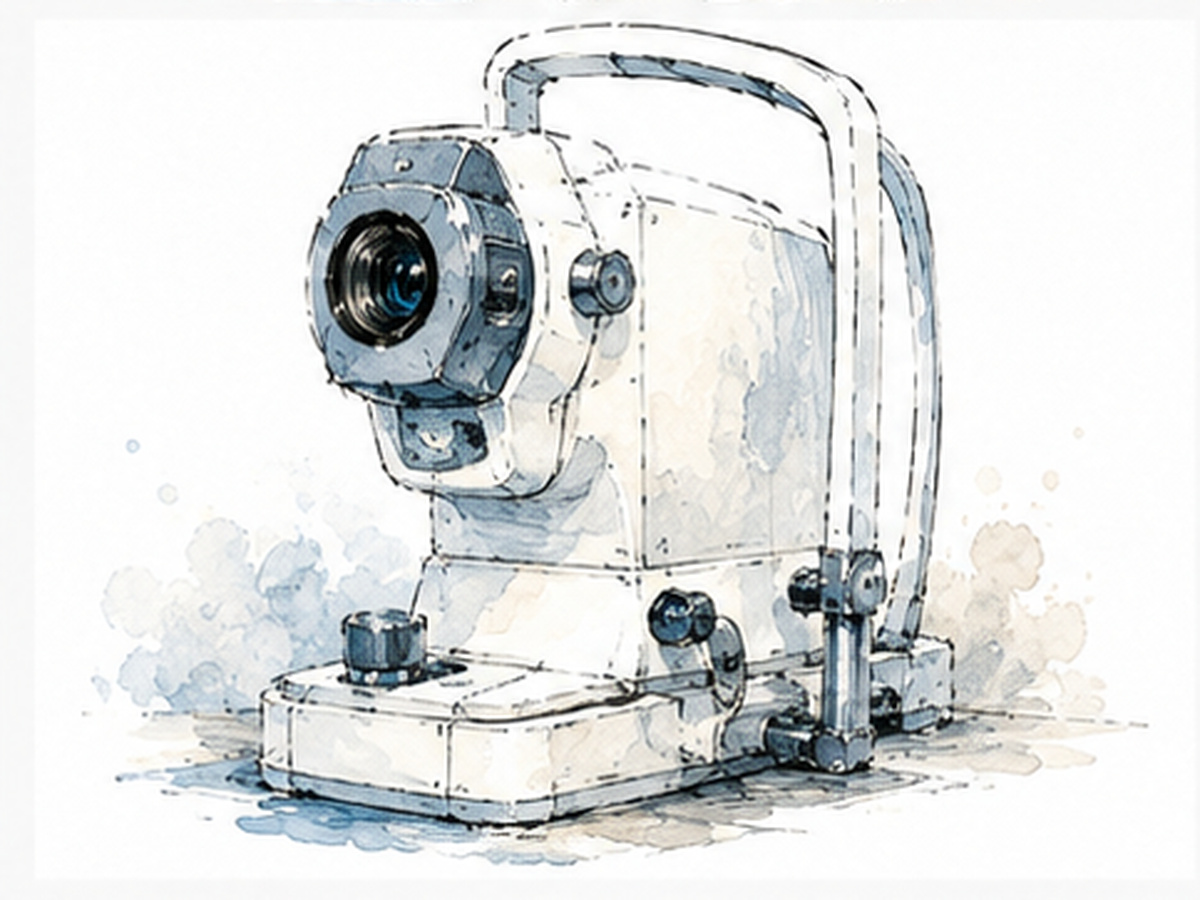
We measure the pressure in the eye. This takes a few seconds. Because pressure fluctuates over the day, a single value says little, and we measure several times if needed.
Corneal thickness (pachymetry)
A thicker cornea makes the measured pressure appear higher than it is, a thinner one lower. Without this value a pressure reading can be misjudged. That is why we measure the thickness as well.
Optic nerve and nerve fibres (OCT scan)
In an OCT scan the optic nerve head is scanned with light, layer by layer, and the thickness of the nerve fibre layer is measured. The device does not touch your eye and the examination takes a few minutes. It often shows changes before anything is noticeable in the visual field, and makes the course comparable over years.
What you see at the edges (visual field)
You look at one point and press a button whenever a point of light flashes up somewhere. This shows whether and where areas are already missing. The examination takes some concentration and a few minutes per eye.
The drainage route in the eye (drainage angle)
We look directly at the drainage route of the fluid inside the eye. This decides which form of glaucoma it is, and therefore which treatment is an option at all.
Which treatments are there?
All treatments pursue the same goal: lowering the eye pressure far enough that the optic nerve is not damaged further. As a rule this is done step by step, moving to the next stage only when the previous one is not enough.
Eye drops
The usual first step. Drops lower the pressure reliably, but have to be used daily and permanently. This is exactly where it often fails in everyday life: people forget them, travel without them, or the eyes react with burning and redness. Some people tolerate the preservatives poorly.
Laser treatment instead of drops (SLT)
SLT stands for selective laser trabeculoplasty. Very short, weak laser pulses stimulate individual cells in the drainage area of the eye. Drainage improves and the pressure falls. Unlike older laser procedures, no tissue is destroyed, which is why the treatment can be repeated later.
Surgery
If the pressure stays too high despite drops and laser, or the damage to the optic nerve progresses, surgery becomes an option. This takes place at a hospital. The procedures all pursue the same goal: creating an additional drainage route for the fluid inside the eye.
SLT laser treatment in detail
How does it work?
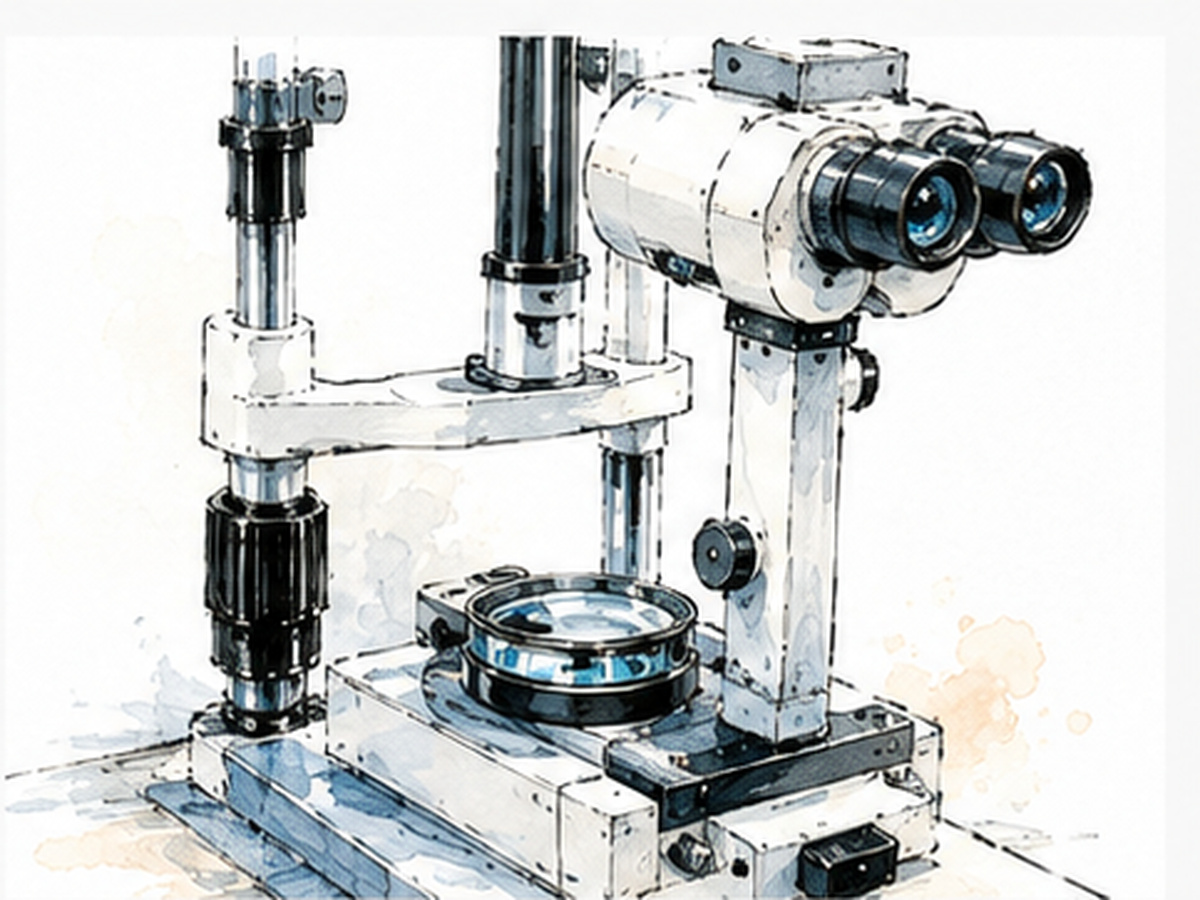
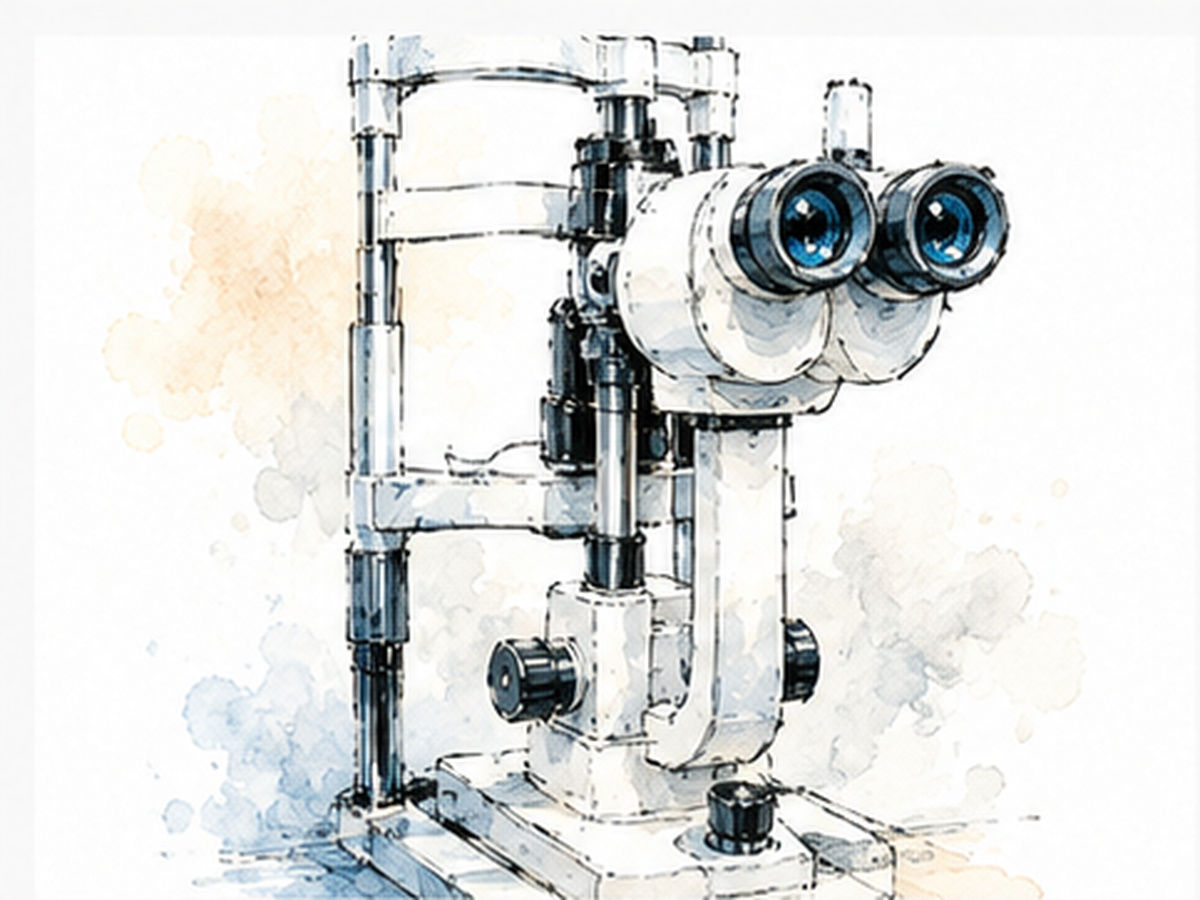
The eye is numbed with drops. You sit at a device similar to the slit lamp, chin on a rest, and a contact lens is placed on the eye. The treatment itself takes only a few minutes per eye. Afterwards we check the pressure once more, and you go home.
Is the treatment painful?
No. Thanks to the numbing drops you do not feel the laser. Most people describe a brief flickering of light and slight pressure from the contact lens.
Can I carry on as normal afterwards?
The eye can be sensitive to light for a few hours and vision can be slightly blurred. You should not drive yourself straight afterwards, so plan for someone to accompany you or use public transport. By the next day most people are back to their normal routine.
Can I then stop the drops?
Sometimes yes, sometimes no. In some of those treated the pressure falls far enough that drops are not needed for the time being. In others SLT works as an addition, so that fewer or better tolerated drops are enough. And in some the eye does not respond sufficiently. This cannot be predicted reliably beforehand, which is why we do not promise it.
How long does the effect last?
The effect gradually wears off over the years. How quickly varies from person to person. Because no tissue is destroyed, the treatment can as a rule be repeated when the effect fades.
What are the risks?
SLT is considered a gentle procedure. Possible are temporary irritation, mild inflammation in the eye and, in rare cases, a brief rise in pressure directly after the treatment. That is why we check afterwards. Everything else is discussed in the consent conversation before you decide.
Glaucoma surgery
Which operations are there?
Minimally invasive procedures (MIGS). Tiny stents or fine openings improve the natural drainage. They are often done together with cataract surgery when both are due. The procedure is gentle; in return the pressure reduction is usually more moderate.
Trabeculectomy. The procedure that has been established for decades. A new drainage route is created under the conjunctiva, through which the fluid drains into a small reservoir. It lowers the pressure strongly but needs close check-ups in the weeks afterwards.
Drainage implants. A small tube carries the fluid to a plate on the eyeball. This is mainly an option when other procedures have not been enough or the eye has had previous surgery.
Cyclophotocoagulation. Here it is not the drainage that is improved; instead the production of fluid is reduced. Mostly used in advanced glaucoma.
Which procedure is suitable depends on the form of glaucoma, on the target pressure and on what has already been done to the eye. We discuss this with you, refer you to the right place and take care of the check-ups before and after.
Important to know: surgery does not restore lost sight either. It is meant to prevent more from being lost.
What does it cost?
The basic examinations are covered by public health insurance. Some of the more detailed procedures and the laser treatment are private services. Here you can see what falls under which.
Glaucoma: examination and treatment
Covered by public insurance
- Eye pressure measuremente-card
- Examination of the optic nervee-card
- Drainage anglee-card
- Consultatione-card
Private service
- OCT scan of the optic nerve[[ Price ]]
- Visual field[[ Price ]]
- Corneal thickness[[ Price ]]
- SLT laser treatment, per eye[[ Price ]]
We discuss what is needed in your case and what it costs before the examination.
UNIQA LARA partner
Our practice is a LARA partner of UNIQA. Depending on your policy, outpatient services can be billed directly to UNIQA, so you do not have to pay upfront.
If you have UNIQA insurance, please use our English request form rather than the online booking and choose “UNIQA with LARA card”, so that we can prepare the billing.
Frequently asked questions
Is glaucoma the same as a cataract?
No. In German the two names sound alike (Grüner Star and Grauer Star), but the conditions have nothing to do with each other. With a cataract the lens turns cloudy; this can be corrected by surgery and sight returns. With glaucoma the optic nerve is damaged, and that damage remains. More on our page about cataract.
Will I get drops in my eyes and see badly afterwards?
To examine the back of the eye we sometimes dilate the pupil. Afterwards you are sensitive to light for a few hours and close-up vision is blurred. You cannot drive during that time. If you would like to come by car, please tell us when arranging the appointment, and we will plan accordingly.
How often do I need a check-up?
With known glaucoma usually two to four times a year, depending on how stable the values are. For prevention without findings, one check a year from 40 is generally enough.
Can I drive with glaucoma?
In many cases, yes. What counts is the visual field, not the diagnosis as such. For the driving licence there are clear requirements, which we can check with an examination.
Does it help to drink less coffee or do sport?
Lifestyle can influence eye pressure a little, but does not replace treatment. More important is that blood pressure and blood sugar are well controlled, because blood supply to the optic nerve also plays a part. As Dr. Schild-Burggasser is also a general practitioner, we look at this connection at the same time.
More services
Arrange an appointment
For an eye pressure check, or if you would like to know whether laser treatment is an option for you, please send us a request.
Request an appointment in English →
In the form, choose the topic “Glaucoma or eye pressure”. The online booking system is in German, which is why we ask English-speaking patients to use the form.
By phone
The phone is staffed at the times below. These are not the opening hours of the practice.
| Monday | 11:30–14:00 & 16:00–19:00 |
| Tue & Thu | 09:00–10:30 & 11:30–13:00 |
| Friday | 09:30–12:30 & 14:00–16:00 |
Phone +43 1 909 22 22
Email anmeldung@schild-burggasser.at
Ketzergasse 51, ground floor, 1230 Vienna, step-free access · Insurance and costs →